
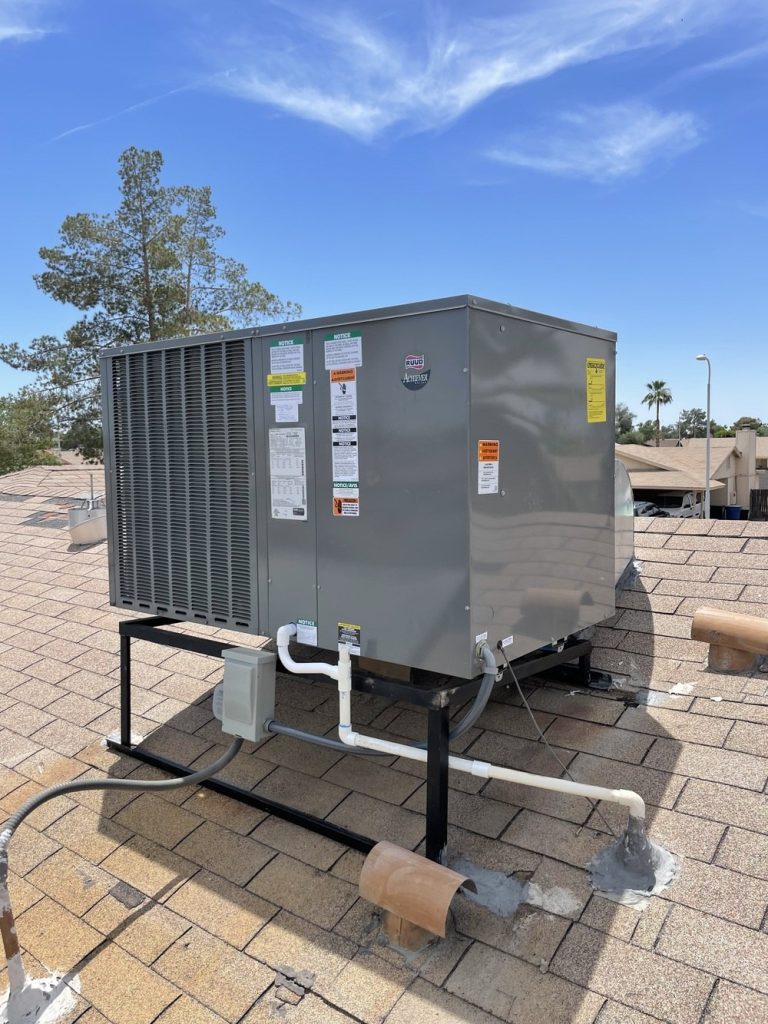
Short answer: Most AC repairs in Gilbert, AZ land between roughly $150 and $650, with a diagnostic fee of about $75 to $200 that is often credited against the work. A failed run capacitor is at the cheap end, commonly $150 to $400. A condenser fan motor is typically $400 to $800. Refrigerant leak repair varies enormously, from around $200 for an accessible fix to well over $1,500. A compressor replacement is the expensive one, often $1,500 to $3,500 or more, and it is usually the point where replacing the system becomes the better decision. Those are typical market ranges, not quotes.
Nobody in Gilbert searches this casually. It is 110 degrees, the air has stopped, and you want to know what you are walking into before someone comes out.
So here is the honest breakdown, including the part where repairing stops being the right answer.
Typical repair costs by what actually failed
| What failed | Typical range | Notes |
|---|---|---|
| Diagnostic / service call | $75 to $200 | Often credited against the repair. After-hours costs more |
| Run capacitor | $150 to $400 | The single most common AC failure, and the cheapest |
| Contactor | $150 to $350 | Wears out from cycling. Straightforward |
| Condenser fan motor | $400 to $800 | Common in extreme heat |
| Blower motor | $450 to $1,000 | Indoor side |
| Refrigerant leak repair | $200 to $1,500+ | Depends entirely on where the leak is |
| Refrigerant recharge | $250 to $800+ | Depends on refrigerant type and amount |
| Thermostat | $150 to $500 | More for smart thermostats with extra wiring |
| TXV / metering device | $500 to $1,000 | Labor-heavy |
| Evaporator coil | $1,000 to $2,500 | Often the repair-or-replace fork |
| Compressor | $1,500 to $3,500+ | Usually means replacing the system instead |
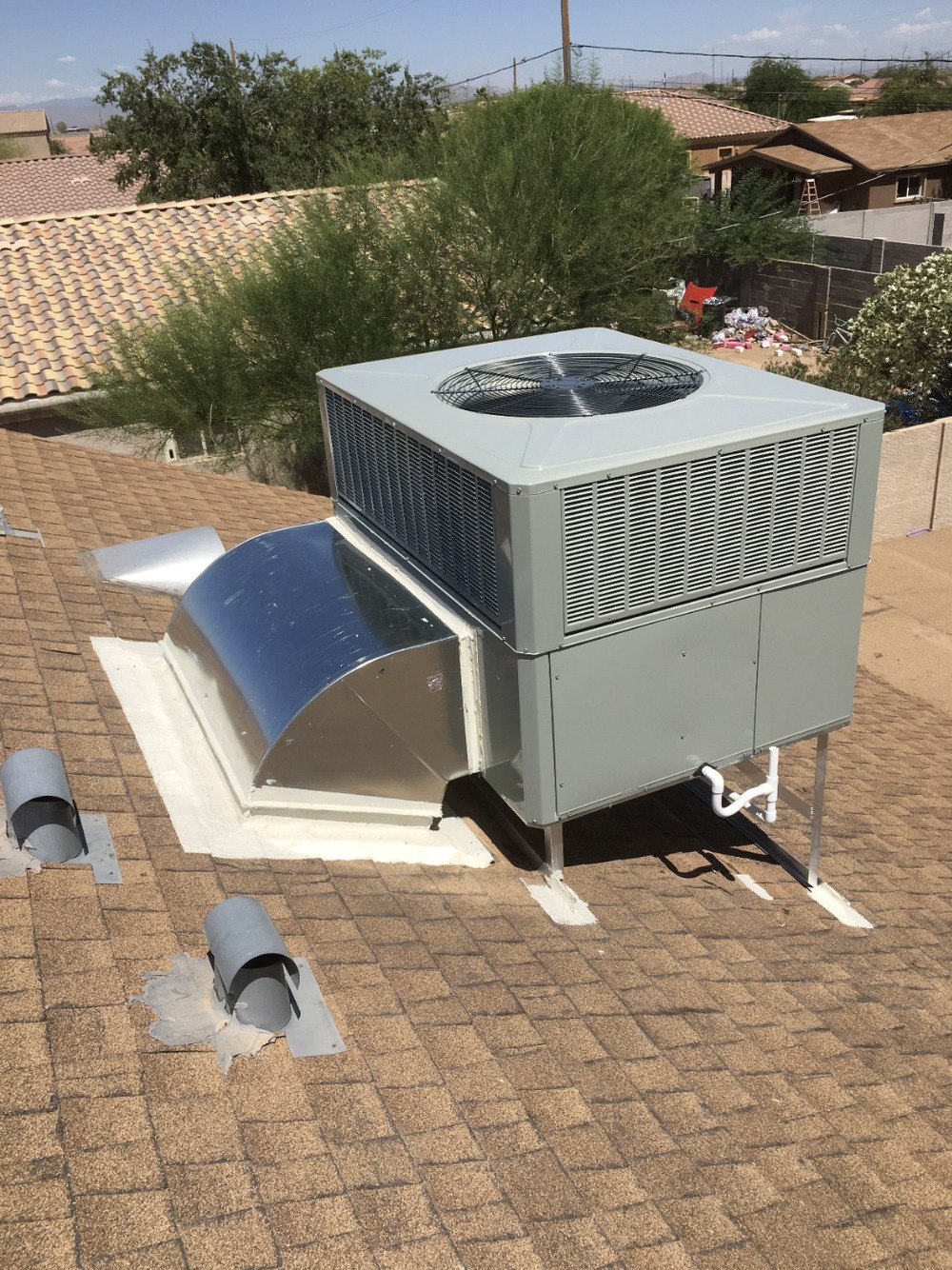
All of these are typical United States market ranges rather than a JB quote. Your actual number depends on the equipment, the access, the parts availability, and what else the technician finds.
The two things that move the price most
Whether it is under warranty. Most manufacturers cover parts for five to ten years on registered equipment. That does not cover labor, and labor is a large share of the cost, but it changes a compressor conversation completely. Find your model and serial number and check. People pay for parts they were entitled to more often than you would think.
The refrigerant your system uses. This matters more every year:
- R-22 was phased out and is no longer produced. If your system still runs it, recharging is expensive and getting worse, and it is a strong argument for replacement rather than repair
- R-410A is the common refrigerant in systems installed over roughly the last two decades, and it is now itself being phased down under the AIM Act. Existing systems remain fully serviceable, but new equipment has moved on
- A2L refrigerants such as R-454B and R-32 are what new equipment uses as of the 2025 transition
The practical upshot: a refrigerant-related repair on an older R-22 system is usually money spent on a system with a short remaining life.
Why Gilbert Summers Are Different
This is not a national market, and Gilbert is not even an average Arizona market. It is one of the fastest-growing, most heavily master-planned communities in the East Valley, which means a large share of the housing stock is newer construction with HOA-standard equipment, all running through the same brutal cooling season at once. The numbers here reflect that.
Systems run far more hours. An air conditioner in Gilbert runs for a large part of the year, often at or near capacity for months. Compressors, capacitors, contactors and fan motors all wear by cycles and runtime, not by calendar age.
Heat shortens equipment life. A system that might last twenty years in a mild climate commonly gives ten to fifteen here. That materially changes the repair-or-replace math, because a twelve-year-old unit in Gilbert’s climate is closer to the end than the same unit elsewhere.
Summer is peak demand. Everyone’s AC fails in the same eight weeks. That means longer waits and after-hours premiums in July and August, and it is the single best argument for having the system serviced in spring.
Dust. Valley dust and monsoon storms load up condenser coils. A coil packed with dust cannot shed heat, so the system runs hotter and longer, pressures climb, and components fail early. A dirty coil is genuinely one of the most common underlying causes behind an expensive-looking failure.
When repairing stops making sense
There is no perfect rule, but these are the real signals:
| Situation | Usually |
|---|---|
| Repair under ~$500, system under 10 years | Repair |
| Capacitor, contactor, thermostat, fan motor, any age | Repair. Cheap relative to replacement |
| Compressor failure, system past ~10 years | Replace |
| Evaporator coil on a system past ~12 years | Usually replace |
| Still running R-22 | Replace. Refrigerant cost alone justifies it |
| Repairs adding up across two or three seasons | Replace |
| Repair cost approaching a third of replacement | Weigh it seriously |
| System under warranty | Repair, almost always |
The pattern that matters more than any single number: if you have paid for something every summer for three summers, you are not maintaining a system, you are funding its retirement in installments.
Our installation page covers what replacement involves when it comes to that.
What you can check before calling
Genuinely worth two minutes, because these turn into service calls regularly:
- The thermostat. Set to cool, batteries good, temperature actually below room temperature
- The breaker. AC systems trip breakers, and a reset is free. If it trips again immediately, stop and call, because that is a real fault
- The air filter. A choked filter starves airflow, and it is the cheapest possible fix
- The outdoor unit. Is it visibly caked in dust, or crowded by a shrub or a fence? It needs clear air on all sides
- The condensate drain. Many systems have a float switch that shuts the unit off when the drain backs up. A clogged line is a common and inexpensive cause of “the AC just stopped”
What not to do: do not open the disconnect box, do not open the condenser cabinet, and do not attempt to test or replace a capacitor. Capacitors hold a dangerous charge even with the power off.
Getting a quote you can actually compare
- Ask for the diagnosis in plain terms, including what failed and why
- Ask whether the diagnostic fee is credited against the repair
- Ask about warranty status on parts before agreeing to anything
- Ask what the repair warranty is, on the part and on the labor
- On anything over a thousand dollars, ask for the replacement number too. A good contractor will give you both and let you decide
- Get it in writing
If a technician goes straight to recommending a full system replacement without showing you what failed, that is worth a second opinion.
Frequently asked questions
How much does AC repair cost in Gilbert, AZ?
Most repairs fall between roughly $150 and $650, plus a diagnostic fee of about $75 to $200 that is often credited against the work. Capacitors and contactors are at the low end; compressors and evaporator coils run into the thousands. These are typical market ranges rather than quotes.
Why is my AC repair quote so much higher than I expected?
Usually refrigerant, a sealed-system component, or after-hours labor. Repairs involving the compressor, evaporator coil or a refrigerant leak require significantly more labor and recovery work than swapping an electrical component, which is why the gap between a capacitor and a coil is so large.
Is it better to repair or replace an AC unit in Gilbert, AZ?
Age matters more in Gilbert than in a milder climate, because systems work harder and typically last ten to fifteen years rather than twenty. Under ten years with a non-sealed-system repair, repair. Past ten with a compressor or coil failure, replacement is usually the better spend.
How much does it cost to recharge AC refrigerant?
Commonly $250 to $800 or more, depending on refrigerant type and quantity. Worth knowing: refrigerant does not get used up. If it is low, it leaked, and recharging without finding the leak buys a few months at most.
Should I repair an AC that uses R-22?
Usually not, for anything significant. R-22 is no longer produced and recharging is expensive. A system still running it is old enough that replacement generally makes more sense than putting money into it.
Why does my AC keep tripping the breaker?
Common causes include a failing capacitor, a hard-starting or failing compressor, a dirty condenser coil making the system work harder, a worn breaker, or a short in the unit. Reset it once. If it trips again, stop resetting and get it diagnosed, because repeated resets into a fault are a fire risk.
Get a straight diagnosis
If your system has stopped or is not keeping up, we will tell you what actually failed, what it costs to fix, and whether fixing it is the right call on a system of that age.
Call JB Industries at (480) 577-5313 or get in touch. We’re based in Gilbert and handle AC repair and service, heating, installation and electrical work for Gilbert homeowners, plus the surrounding Mesa, Chandler, Tempe, Scottsdale, Phoenix, Glendale, Paradise Valley, San Tan Valley and Gold Canyon area. We hold a 5.0 star rating across more than 120 Google reviews.
If the room that never cools is the actual problem rather than the whole system, mini split installation cost covers the other way to solve it.